Stop CleaningUnder Every Seat.
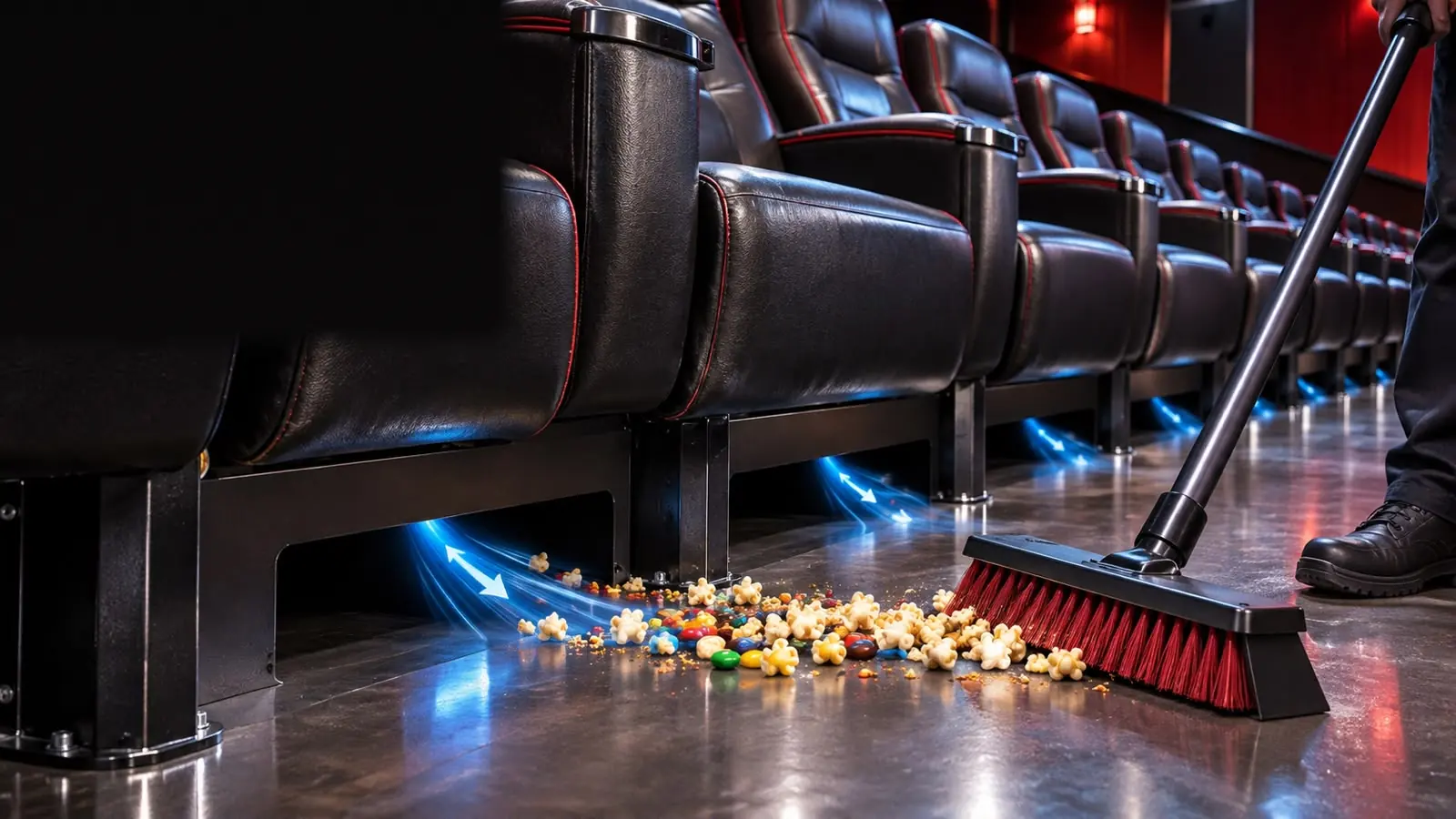
CinemaSweep turns the hardest part of theater cleanup into a simple sweep-and-suction process. Low-profile intakes beneath the seats pull popcorn, candy and everyday dry debris into a centralized collection system—helping your team reset auditoriums faster.
Designed for fixed-seat and luxury-recliner theaters. Retrofit and new-construction configurations.
- SweepStaff push loose debris toward the intake.
- SuctionThe selected row runs a short cycle.
- ReadyThe row is set for the next guests.
The problem hiding under every row
The Movie Ends. The Cleanup Clock Starts.
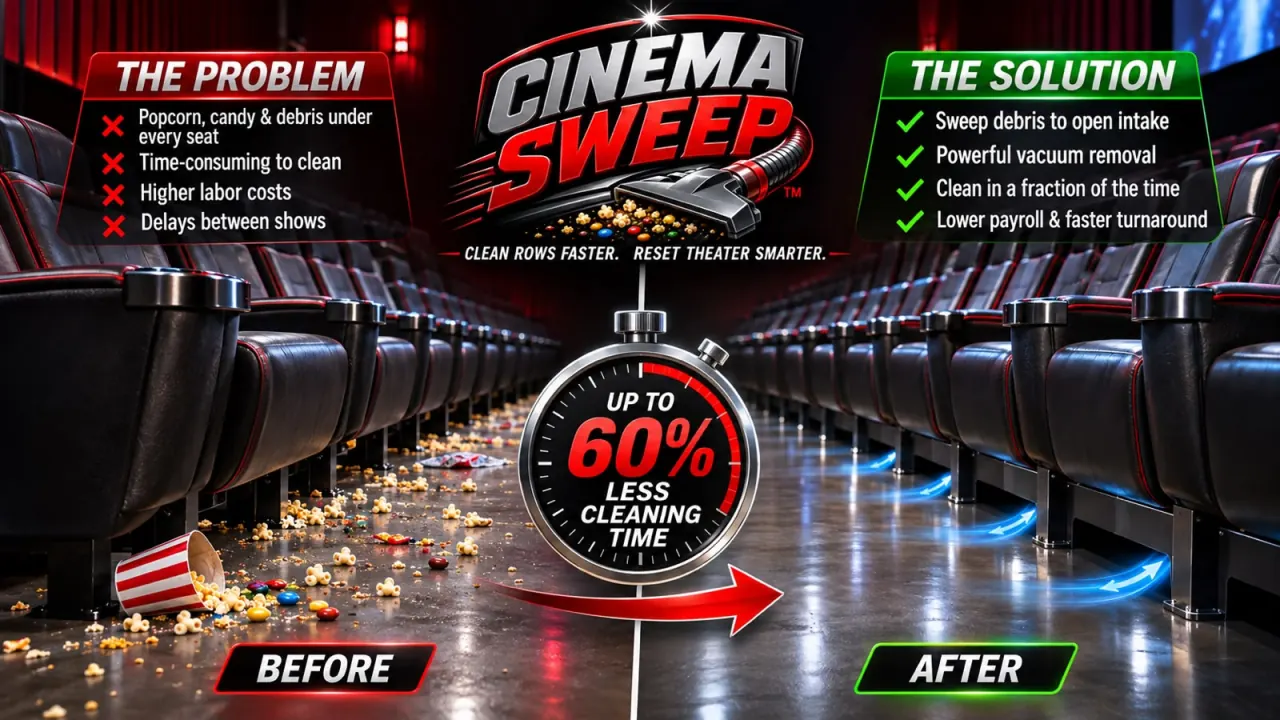
Popcorn is under the recliners. Candy and wrappers are tucked around seat bases. Tight rows make every pass harder. Your crew has minutes to get the auditorium ready for the next guests—and conventional cleaning tools make the most awkward spaces the most labor-intensive.
Time
Every extra minute cleaning one auditorium compounds across daily showings.
Labor
Manual sweeping, reaching and vacuuming take attention away from the next reset.
Debris
Hidden snack waste can remain under seats after the obvious mess is gone.
Experience
A clean room sets the stage before the next movie even begins.
Simple by design
Sweep It Back. CinemaSweep Takes It Away.
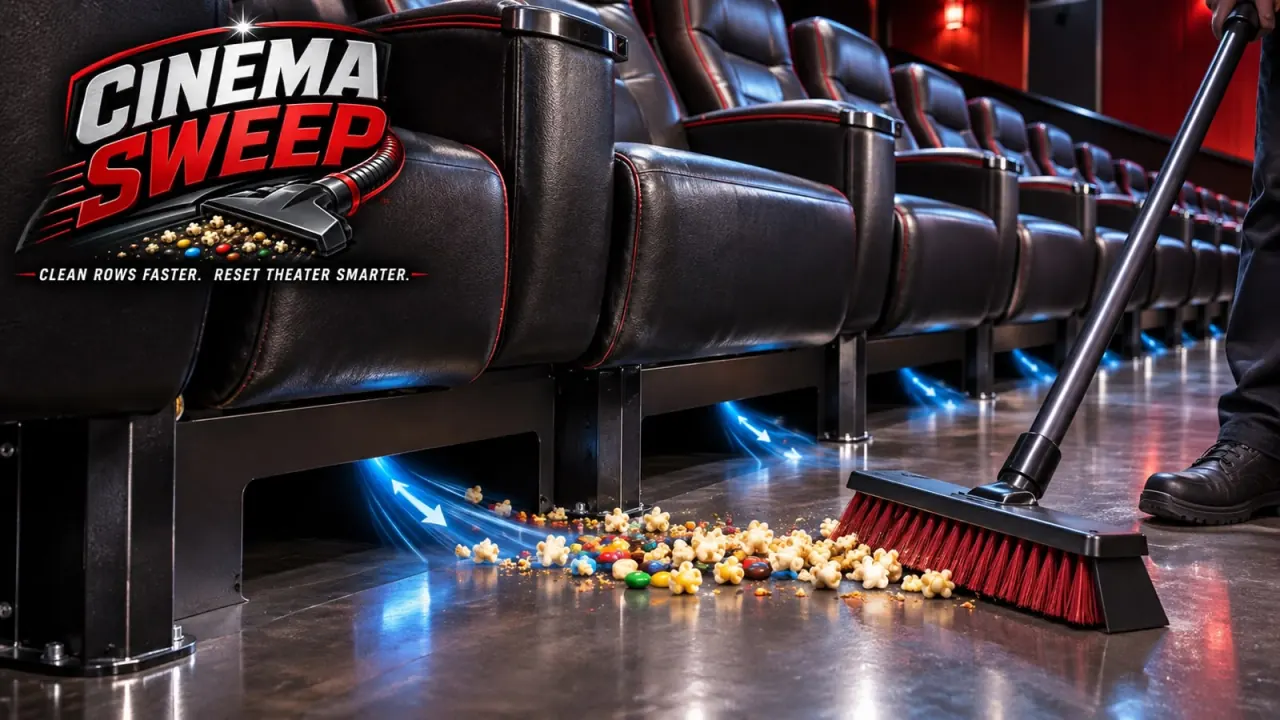
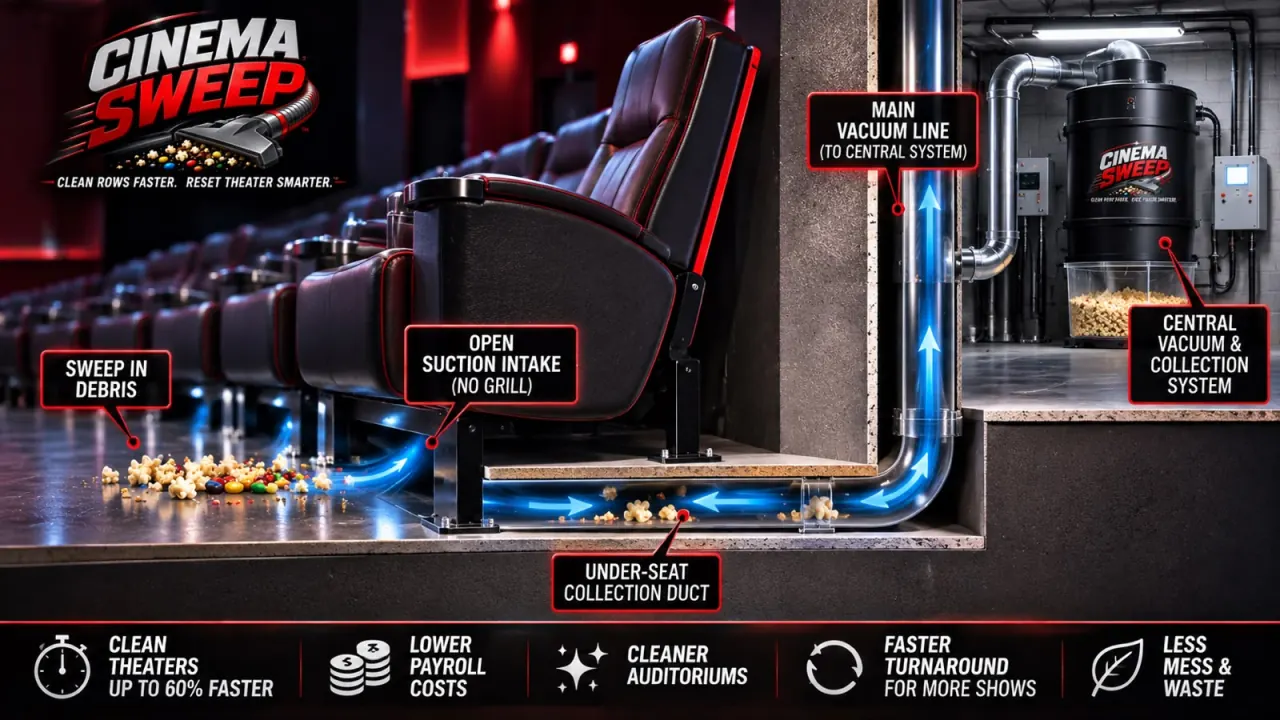
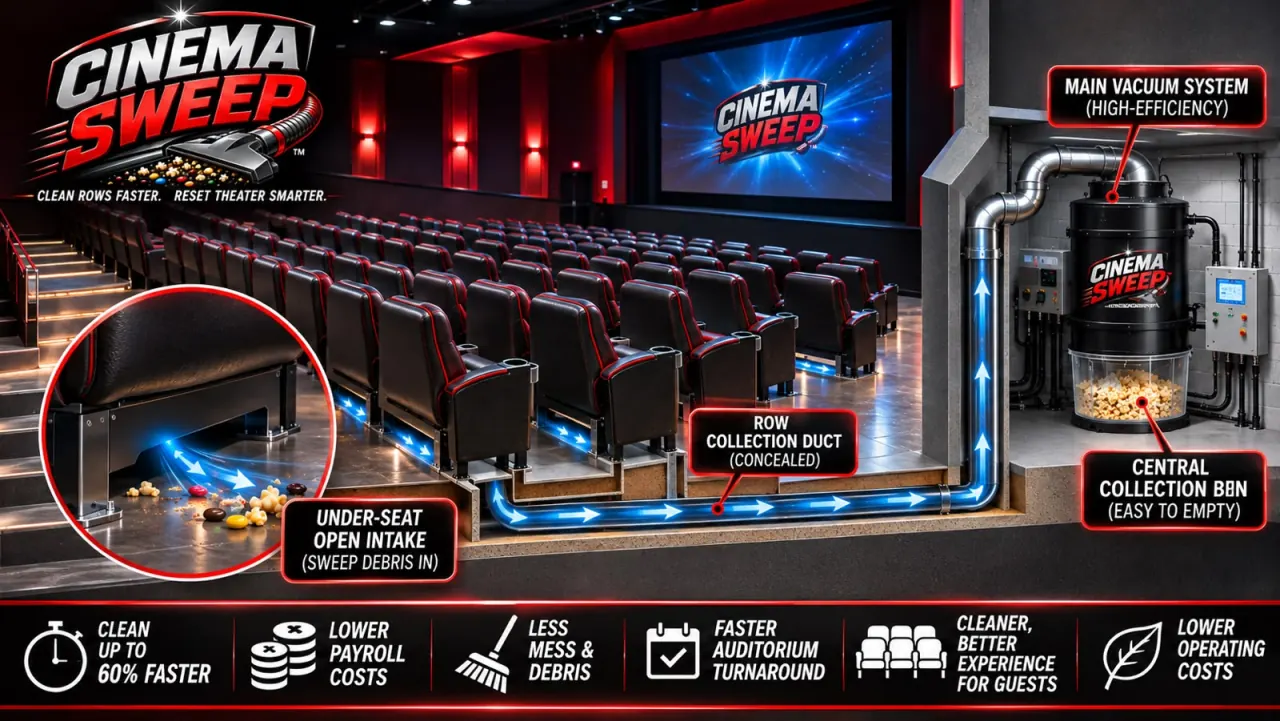
CinemaSweep puts the pickup point where theater debris naturally ends up: beneath or immediately behind the seats. Crew members push loose debris toward the low-profile intake. Selected row zones activate, transporting waste through concealed ductwork to a remote collector. No dragging a canister down the row. No need to move the seats.
- SweepPush loose debris toward the intake.
- ActivateRun the selected row or section for a short suction cycle.
- ResetEmpty a central collection bin on the maintenance schedule.
One simple cleaning motion. A purpose-built system behind it.
More than a cleaner floor
Give Your Team Back Their Time.
Faster turnarounds
Reduce repetitive passes under seating and help rooms get guest-ready sooner.
Better use of payroll
Potentially decrease cleaning labor-hours per auditorium; measure real savings with a pilot.
Less hidden debris
Capture loose popcorn and common dry snack debris at the source.
No seat movement
Designed around anchored seating and existing recliner footprints.
Centralized waste
Collect debris remotely instead of repeatedly carrying it out by hand.
Built to fit
Configurations for retrofits, new builds, stadium risers and different row layouts.
Put your own numbers to work
What Could Faster Cleaning Be Worth?
Every location runs differently. Enter your current cleaning time, labor rate, showings and the improvement you want to evaluate. CinemaSweep estimates potential labor-hour and payroll savings—clearly separating assumptions from measured performance.
Calculate My Potential SavingsIllustrative estimates only. Actual results depend on seating, debris levels, workflow, site configuration and pilot measurements.
You enter
- Auditoriums
- Resets per auditorium per day
- Current cleaning minutes per reset
- Staff actively cleaning per reset
- Loaded labor cost per staff hour
- Operating days per year
- Assumed time reduction
You get
- Baseline annual cleaning labor-hours
- Labor-hours potentially saved
- Estimated labor-capacity value
- Minutes potentially saved per reset
An estimate from your own assumptions. Not a pilot result.
The technology behind the simplicity
Built In. Out of the Way. Ready Between Shows.
Under-seat ports connect to modular row manifolds. Zoned suction concentrates airflow where staff are cleaning. A remotely positioned vacuum and cyclone separator send debris to an easy-service collection bin. Service access, safety interlocks and lost-item recovery features are part of the design.
- Low-profile intake
- Row-by-row suction
- Remote collector
- Serviceable manifolds
- Lost-item access
- Retrofit-ready layouts
A Smarter Fit for More Than One Seating Layout.
Luxury Recliner Cinemas
Under-seat intake options positioned to work around premium seat bases.
Traditional Auditoriums
Shared or individual port arrangements for fixed theater seating.
New Construction
Integrate debris collection channels into risers or flooring during the build.
Stadiums & Performance Venues
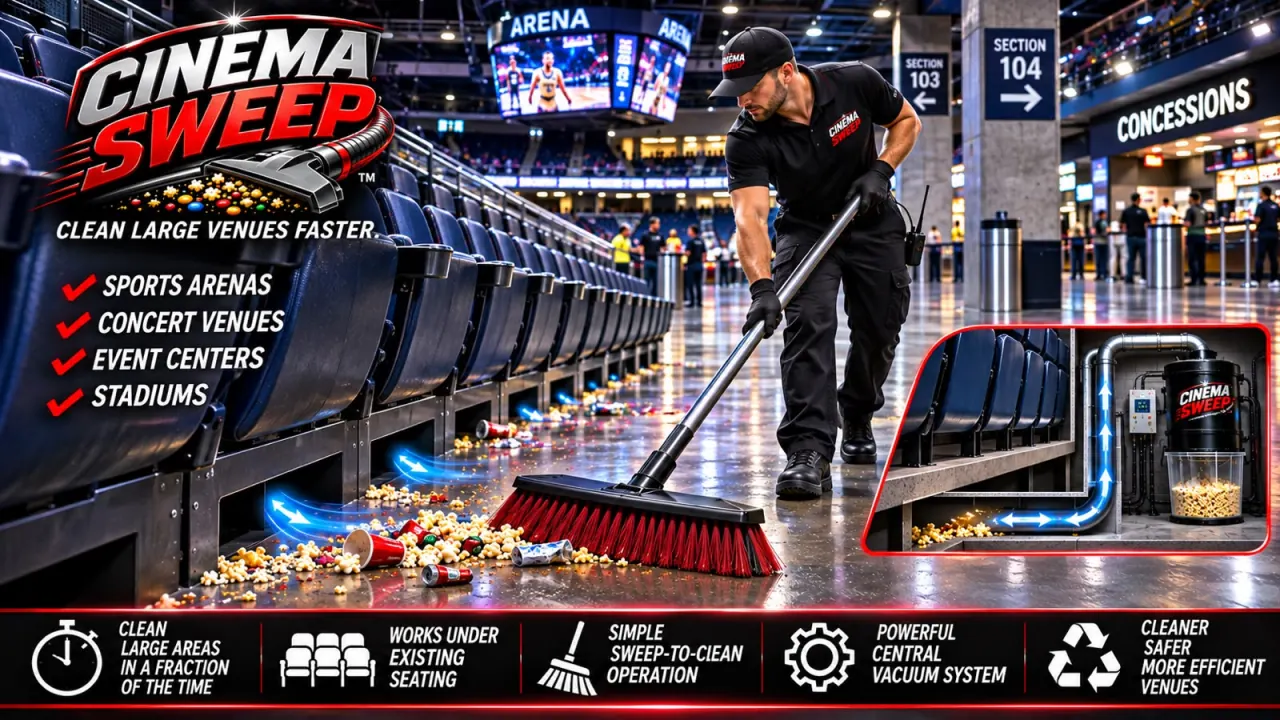
Adaptable debris infrastructure for other high-capacity row-seating environments, subject to site-specific engineering.
Concept illustrations of the proposed system, not photographs of an installed site. Figures printed inside an image, such as “up to 60%”, are development targets, not measured results.
See all applicationsStart with one row
Prove the Value Before You Scale.
We believe performance should be measured, not guessed. Start with a site review and a limited-row pilot. Compare existing cleaning time against a CinemaSweep-assisted reset, check debris pickup and noise, and use the results to design a practical auditorium rollout.
Review your theater layout.
Design the pilot zone.
Measure cleanup performance.
Evaluate a full installation.
Your Next Showing Shouldn’t Be Held Up by the Last One.
Discover how an under-seat cleaning system could simplify daily auditorium resets and change the economics of your cleaning workflow.
Tell us about your auditorium. We’ll start with a practical discussion of fit, installation and measurable outcomes.